
What do you do when SMART goals don’t work?
When my sweetie and I moved from our acreage to the big city when she started her PhD, we did a variation of the ‘date night’ thing, where once a month we took in an event or attraction around Vancouver. We bought tickets to the Vancouver Whitecaps, and we’ve been back a couple of times since. This was also about the time that Welcome to Wrexham and Ted Lasso came out, both stories about heart and community, which we are there for.
“Concentrate on what will produce results rather than on the results, the process rather than the prize.” — Bill Walsh, apparently a famous football coach
Of course soccer, or any organized sport, has a set of rules, traditions, expectations, and clear outcomes that makes it easy to focus on performance, details and process. This is when SMART goal-setting and their fellow travellers are useful and helpful.
https://practicalmanagers.com/2026/04/11/smart-goals-what-are-they-good-for/
But what do you do when the objective, rules, and processes aren’t clear. When you’re building a new business in a new field? When personal goal-setting isn’t cutting it? Or you have competent people or teams that don’t need constant supervision? Where the outcome is more important than the process?
What happens when you’re working on the frontier?
May I recommend OKRs?
Objectives and Key Results (OKR) traces back to Andy Grove at Intel in the 1970s. Grove adapted Peter Drucker’s Management by Objectives (MBO) framework, stripping out what he saw as its bureaucratic tendencies and adding a sharper focus on measurable outcomes rather than activity. In a sense, he zigged when SMART goals zagged.
John Doerr, who had learned it at Intel, brought it to Google in 1999. Sergey Brin and Larry Page adopted it almost immediately, and Google’s extraordinary growth made OKRs synonymous with high-performance organizational alignment. Doerr later codified the framework in his 2018 book Measure What Matters.
How It Works
The definition of Objective and Key Results is in the name, and has two parts:
Objective — a qualitative, inspiring statement of what you want to achieve. It should be memorable, directional, and motivating. Not a metric.
Key Results — typically 2–5 quantitative measures that define how you’ll know you’ve reached the objective. These are outcomes, not tasks. Notice the key results don’t tell you how to get to the key results, or even what to do.
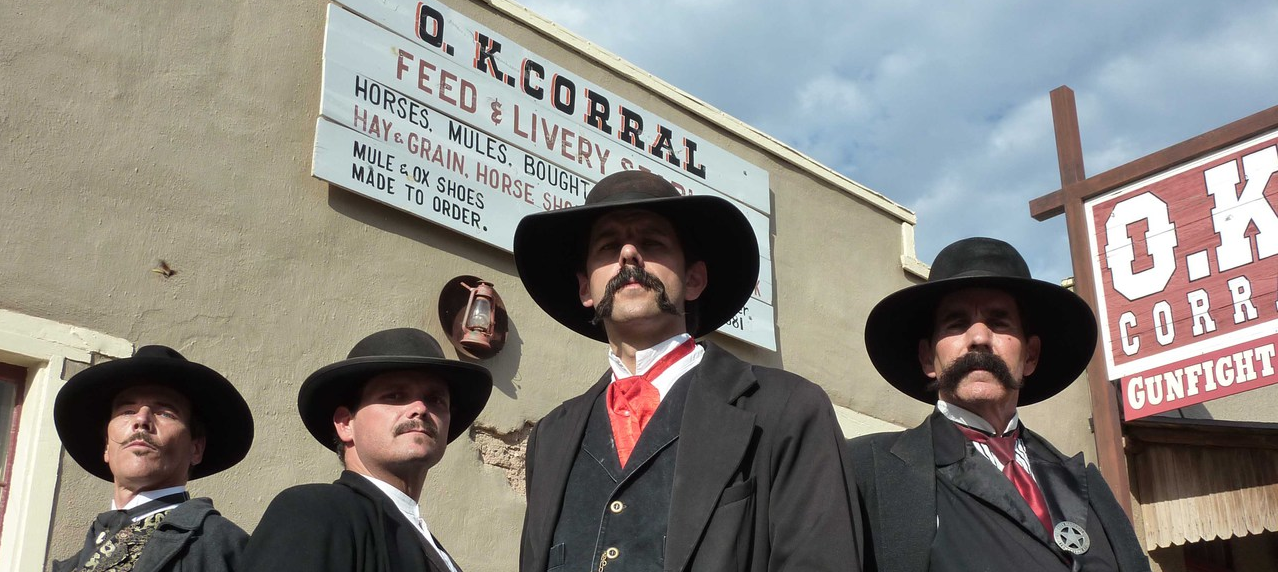
Objective: Bring lasting peace to Tombstone
KR1: Disarm or deputize 100% of known Cowboys operating within Tombstone city limits.
KR2: Resolve 100% of reported citizen complaints within 48 hours, with written disposition filed
KR3: Secure written cooperation agreements with at least 3 of the 5 major ranching operations in the county.
KR4: Conduct at least 2 public town hall meetings per month with documented attendance of 50+ citizens.
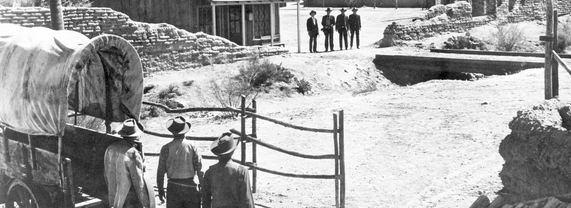
In this example, Tombstone’s Sheriff Wyatt Earp couldn’t “practice” bringing peace to town. I mean, what would that even look like? But he could build his network (KR3 & KR4), build public confidence (KR2), enforce the firearms ordinance (KR1) by showing up at the OK Corral with his deputies.
OKRs typically run on quarterly cycles at the team level and annual cycles at the organizational level, with weekly or bi-weekly check-ins on progress. In most implementations, everyone’s OKRs are visible company-wide. This transparency creates organizational alignment without requiring top-down instruction at every level.
OKRs are also often set aspirationally, where a 70% achievement is considered a success. Consistently hitting 100% is interpreted as under-ambition. Think stretch goals or moonshots.
Application
OKRs are well-suited to:
- Knowledge work and product organizations where outcomes matter more than output and work is complex enough that prescribing how undermines performance
- Fast-moving companies or teams that need alignment without heavy hierarchy
- Scaling organizations trying to maintain coherence across departments without micromanagement
- Situations where autonomy is high — OKRs give people a what and let them own the how
They work less well in:
- Highly regulated or compliance-driven environments where activities and processes are legally mandated
- Early-stage chaos where the right objectives themselves are unknown and shift weekly
- Individual contributor performance management – OKRs were designed for teams and organizations; using them for annual employee reviews tends to distort behaviour. People sandbag targets to protect their ratings
Interplay with SMART and HARD
OKRs + SMART: SMART operates at the individual goal level. The Key Results inside an OKR should pass SMART criteria: they need to be specific, measurable, time-bound. The Objective itself, however, deliberately resists SMART. It’s meant to be inspirational, not a “realistic” constraint. SMART is best applied within the KR layer, not to the OKR as a whole.
OKRs + HARD: HARD goals align naturally with the Objective component of OKRs. HARD pushes against sandbagging and comfortable goal-setting. HARD goals psychological framing reinforces why moonshot Objectives deserve genuine commitment. Where OKRs give you structure, HARD gives you the emotional stickiness.
https://practicalmanagers.com/2026/04/18/getting-hard-beyond-smart-goals/
CLEAR was designed as a replace to SMART, so if that’s your preference…
https://practicalmanagers.com/2026/04/25/getting-clear-beyond-smart-goals/
Mixing and Matching
…my bias: tools are not proscriptions. Choose the tool or tools that serve you best, instead of spending your time serving the tools.
…and a caveat: no matter which process or tool you choose or create, be clear about why and how you use them, and how you expect them to work within your team.
Learn More
Learn more by reading the book:
Measure What Matters
or at John Doerr’s own website:
or from a product manager’s perspective:
Leave a Reply