
Or How I Learned to Stop Worrying and Love the Internecine Politics of the Roman Empire
Imagine you’re the wealthiest man in the world. Imagine further that you’ve been groomed by the gods themselves from childhood to assume the mantle of the emperor, tutored by the wisest minds in the known world. Literally adopted into the role.
We don’t have to go back to ancient history to understand how this kind of pressure might affect us. We just have to look at the new emperors of our modern era. People like Musk, Zuckerberg, or Besos. People who have enormous power (wealth), and wield it like belligerent teenage boys.
Musk, for example, was so cash poor in the early days of SpaceX that he was borrowing rent money from friends. This was a man shaped by profound childhood humiliation — bullied savagely at school to the point of hospitalization, emotionally cold-shouldered by a difficult father, an outsider who used books and computing as refuge. He built his adult identity around the conviction that he could see what others couldn’t, that the critics and the skeptics were simply wrong.
Surrounded by sycophants, vindicated by history, chemically altered, and unchallenged. The question isn’t really why Musk became harder to deal with after his success. Would any of us would have fared better?1
How would you stay grounded? Who’s council do you trust? What values are your touchstones, that allow you to stay sane while all around you continually fight for advantage and position at your expense.
Perhaps if our modern emperors had the benefit of being tutored by the best philosophers in the know world as children, we’d all be better off. But that’s not where we are. We have to deal with what’s in front of us. Which is the first value that Marcus Aurelius tried to keep front-of-mind as he ruled the Roman Empire: accept reality as it is, not as you wish it to be.
Meditations was never meant to be published. They were meant only meant for his eyes, his reflections, and his private thoughts. Reading it from that perspective, instead as a sacred text, it tells us the two things about Marcus the man.
What Emperors Are Afraid Of – Death…
7.56 Think of yourself as dead. You have lived your life. Not take what’s left and live it properly.
It puzzled me how often the death theme came up for him. The number of times he told himself not to be afraid of death, that it was a natural process, that fear was childish, made it clear this occupied much of his thinking. At first, I found this is a bit off putting, until I realized the only person he was trying to convince was himself.
By accepting I am not in control of the time or manner of my passing, that there are many things I don’t control, I was able to let go, just a little bit, of a life-time of frantic activity. Who isn’t afraid of death? I can accept it and still not like it, but I can also move on. I can put aside the distractions and focus on what I really do want to accomplish in whatever time I have left.
It is amazing, even as emperors, how little we actually control besides our own thoughts, our own perceptions, and our own actions. Most of us, not even that. Letting go of trying to control everything else is liberating.
…and Insignificance
6.44 My city and my state are Rome – as Antonius. But as a human being? The world. So for me, “good” can only mean what’s good for both communities.
9.42 …humans are made to help others.
The second theme from Marcus’ writings was his orientation to service. Grounded in the axiom that we are social creatures, that we depend on others to succeed and thrive, time and again he reminded himself that his success depended on how well he could serve society and others.
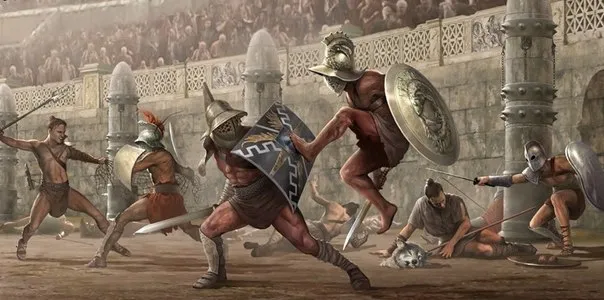
Marcus was not a saint, and he doesn’t seem like he would be fun at parties. He didn’t enjoy the gladiatorial games for example. Not because they were morally wrong, but because he found them tedious. He didn’t take sexual advantage of his slaves, not because owning other humans is wrong, but because he thought it would damage his character.
It seems like I’m picking the fly shit out of the pepper, compared to how past and present emperors have and do behave. He does seem to have been good and loyal friend and ally. At least he tried to be.
Stoic Principles in Leadership
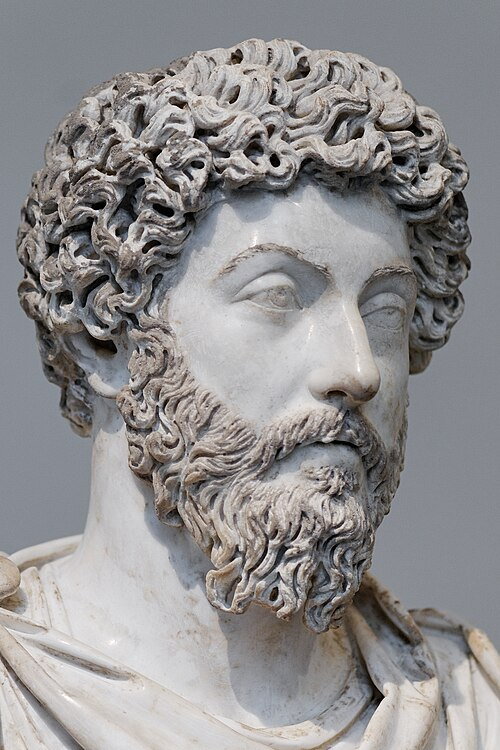
If I were to summarize that lessons I drew from Meditations, it would be the to emphasize the three principles of stoic thought:
Right Perception
5.17 It is crazy to want what is impossible. And impossible for the wicked not to do so.
6.13 Pride is the master of deception.
6.21 What harms us is to persist in self-deceit and ignorance.
Allow yourself to see what is actually happening, instead of what you think or wish were happening. Since humans are very very good at rationalization and self-deception, this alone is a very powerful principle.
Right Thought
2.2 Stop allowing your mind to be a slave, to be jerked about by selfish impulses, to kick against fate and the present, and to mistrust the future
8.16 Remember that to change your mind and to accept correction are free acts too.
11.9 Because anger, too, is a weakness, as much as breaking down and giving up he struggle. Both are deserters: the man who breaks and runs, and the one who lets himself be alienated from his fellow humans.
This is the gap between emotion, reaction, and action. When we can take a moment and follow our intentions and goals, instead of our anger, sadness or outrage, we and those we serve will all be better for it. Again, easier said than done.
Right Action
4.24 If you seek tranquility….do less, better….eliminate unnecessary assumptions….to eliminate the unnecessary actions that follow
9.1 Injustice is a kind of blasphemy. Nature designed rational beings for each other’s sake: to help – not harm – one another, as they deserve. To transgress its will, then, is to blaspheme against the oldest of the gods.
9.5 And you can also commit injustice by doing nothing.
I realize it’s easy to be benevolent and forgiving when you’re the emperor, but many emperors seem to forget that. Marcus is considered one of the better rulers of the Roman Empire. For him it seemed to start with not holding grudges, and remembering why he was put into the role he had.
“We’re here to walk each other home”
— Mike Posner, on the A Bit of Optimism podcast
If you want to learn more about how Marcus Aurelius shaped his own thinking, grab a pencil and a high-lighter, and make a skeptical read Meditations. Make notes, argue with him, hash out your own values. Maybe take the ideas that appeal to you most, or that inspire you, and start your own Meditations.
This is the second part of the Stoic Read-Along. See the full list here:
Part One is here:
Enchiridion – A Stoic Case Study
- To be clear: I can be empathetic to a person whom I revile. Just because I think I understand why someone is a supervillian doesn’t make them less evil. ↩︎
Leave a Reply