
In Which I Try to
Explain AI to my 90-Year-Old Dad,
Temper His Enthusiasm, and
Defend It To My 30-Year-Old Daughter….
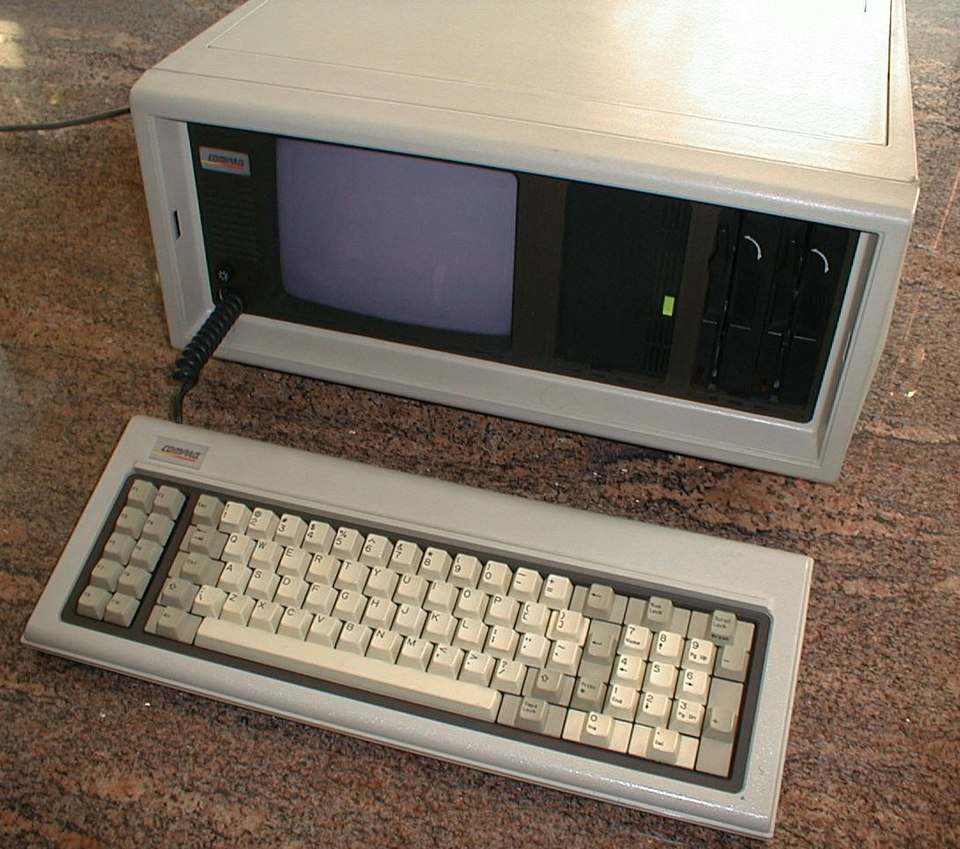
My father’s always been enthusiastic about technology. I remember him have a rather nice stereo that I would play astronaut with – I would use the console as my ‘flight controls’ while reclined in the ‘launch position’ in his good chair, which I’d dragged over for that purpose1. There was a teletype machine in his home office (he was an import broker), and I would try to figure out how to create images on the printout using the punch tape in a loop. His first laptop was a Compaq, in 1983, the kind where the keyboard attached to the face of the CRT for carrying and storage.
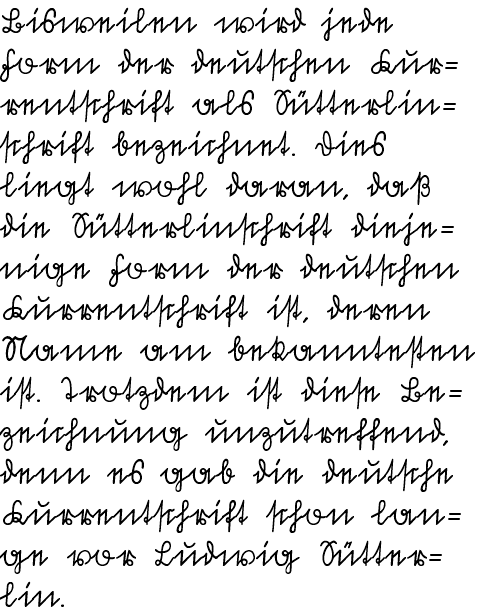
Naturally he was curious when I explained to him that I was using AI to transcribe and translate his father’s letters from the Russian front2. When his mother, my grandmother, passed away they came into his care. He’d never been able to read them. My grandfather had been schooled in the Sütterlin script, and he sometimes used an even earlier Kurrent script when tired or in a hurry3. Therefore he had his own fairly unique handwriting that can’t be reliably machine-OCR‘d. When the technology that might be able read these 83-year-old letters came along, he was delighted and amazed.

He passed them on to me two years ago, and I figured it might give ChatGPT a challenge. It passed with flying colours: transcribing, translating, and even recognizing and extrapolating the marginal and upside-down writing in the correct order.
He (my father) had questions when one of my nieces (a policy analyst), my brother (an architect and project manager), and then my daughter (cannabis sales) explained to him the evils of AI: impact on the environment, water consumption, and it being ‘bad for the brain’. My brother talked about power consumption, and my daughter talked about AI misinformation, hallucinations, and parasocial relationships.
I think they were mostly right, but they were also a little wrong. It’s much worse and maybe better than we think. It all depends on what we – as a society – do in the next decade. In my opinion, this takes precedence over the climate crisis.
Sorry, I’ve probably lost you. Conspiracy theories and all that.
I tried to write to my dad in a way that would make sense to everybody now on the family email chain, grounded in real world examples and the current thinking of researchers and academics smarter than me as best I understood them. This was all before I read Yuval Noah Harari’s “Nexus: A Brief History of Information Networks from the Stone Age to AI”. I think I got it mostly right, except maybe I was being too optimistic.
Relying on our planetary ability to engage in collective action may be overrated.
So join me as I, a non-expert, explain AI to my 90-year-old father: what it is, why it’s important, what some of its impacts might be, how it could end the world, and what we need to do (if anything) about it.
Or skip ahead if you don’t want to see the light at the end of the tunnel, growing larger at an alarming rate, much like an approaching train might.
- It was the 70s, we were latchkey kids. That was the deal: in exchange for being abandoned without supervision we got away with some things. No, I’m to going to tell you what all those things were. At least not while my mother is still alive. ↩︎
- I hope my Grandfather wasn’t a Nazi, but he died in their service. He’d joined the Wehrmacht during the depression, before the fascists came to power. Family lore has it he volunteered for the Russian campaign to earn the promotion denied him because he married a Jewess (my grandmother). When the Volksturm came to the door in 1945 looking for my father (then ten) for the defence of Berlin, she told them to f*** off. “You already got my husband, you’re not getting my son. Besides, he has asthma. You don’t want him.” She smoked daily into her eighties. ↩︎
- Sütterlin & Kurrent were banned by the Reich Ministry of Education in schools and official use suddenly and all at once on January 3, 1941, because it was too “Jewish”, a lie of political convenience. Apparently Hitler and Napoleon both used their authoritarian powers to drive modernization. I imagine they both would have loved AI. All schooling switched to Latin cursive immediately. ↩︎


Leave a Reply to Anonymous Cancel reply