

Previously: Rebuilding Relationships When Boundaries Are Respected
We’ve covered a lot in the last seven weeks. It’s been cathartic, since I’ve not always been the best at keeping my own boundaries. While writing this, my personal breakthrough came when I realized that keeping boundaries is a filter, not a wall.
And I still need the practice. Just yesterday my sweetie asked me if I wanted to run some errand with her. I had a lot of desk work to catch up on, so I screwed up my courage and said no. She laughed at me because of the face I made. She said I looked like one of the dogs who had been begging for steak and had been offered broccoli instead.
And I also remember some of my best “no”s, like the time I was told “If you don’t take so-and-so on as your project management office administrator, we’re going to have to let her go”. I held out for the right person, and it was the right decision. Today she (my first choice) works at a senior/VP level at that same company, and I’m proud that I had a small contribution to her success by fighting to give her an opportunity.
The series has been popular enough that I’m going to publish it as it’s own e-book with worksheets and such. If you want to be on the reviewer/previewer list, please subscribe (the button is on right).
In the meantime, here’s the quick reference of the highlights as downloadable worksheet you can print off use for yourself.
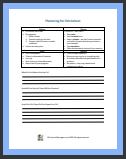
Quick Reference Guide
| Before | During |
| * It’s a filter, not a wall * Be prepared * Write it down * Practice saying it out loud * Have a recovery plan | * “I’d love to … but I can’t” * Stay calm * Use a neutral tone * Keep it simple – You don’t have to explain yourself to anyone else but your boss or your sweetie. * Use repetition * Offer an alternative, but only if you want to. |
| After | Always |
| * Don’t Backpedal – it’s not your job to manage their emotions * Check in if needed * Let It Go – hard, but doable * Notice how you feel afterward * Keep track of your progress | * Calm, simple repetition * Know what you want to say yes to, say no to everything else * It’s a learnable skill that will get better with practice * Be patient – they may need time & repetition to adjust to a new boundary |
Remember
Saying no is not selfish—it’s necessary. It’s not so much a wall as a filter. Every no makes room for a more meaningful yes.
You read all all the way to the end? Might was well:
Think this might help someone you know? Be a pal & share:
This really helped you?
Leave a Reply